


- Article comments count: 0
Food Is The Draw. The Licking Stick Is The Finisher.
A killer setup starts with food, but food alone won't put a deer on a spot. Here's why a HODAG Licking Stick earns a permanent place inside every food plot on your property — and how to get one working for the season ahead.
Everyone knows the value of a good food plot.
The food brings them to the area. It concentrates travel. It gives deer a reason to show up on your property day after day, night after night, year after year. Food is the draw — nobody's arguing that.
But if you've hunted a big open plot, you already know what "draw" doesn't guarantee: a shot. A buck can spend an hours in your plot and never get within 60 yards of your stand. He's fed. He's happy. He's totally out of range.
That's the gap a HODAG Licking Stick closes.
The food brings the deer to the plot. The Licking Stick puts them on a spot — a specific piece of ground, within bow range of your stand, where they stop, work the scrape, work the branch, and give you the picture or the shot you need.
That's what we mean when we say the Licking Stick is the finisher.
Why It Earns A Spot In Your Food Plot
Four reasons — every one of them earns its keep.
1. It gives the deer a spot to scent communicate.
We do everything we can to make our stands as good as possible. Good access. A well-designed food plot. Water on or near the plot. Cover behind and around. Every element stacks the odds a little more in our favor.
Adding a Licking Stick is one more element in that stack. It gives the deer already in the food plot a place to scent communicate — a communal hub where every mature buck in the area will eventually work in. Every doe in the area will check it too. Fawns will use it. Spikes will use it.
That's not just about seeing more deer. It's about giving the deer that are already in your plot a reason to be somewhere specific inside the plot — instead of drifting wherever the food happens to be greenest that week.
2. Visual curiosity.
Why do we love Licking Sticks in a food plot instead of tucked back in the timber?
Because in a food plot, they stand out like a sore thumb. A five-foot stick in a plot of brassicas, rye, or clover, is the lighthouse in the middle of an open sea. Every deer that steps into that plot sees it — from every angle, from every entry point, from the moment they clear the treeline.
Deer are far more visual than most hunters give them credit for. When something new appears in a plot they know, they investigate. That's what curiosity does. That's what a Licking Stick in a food plot triggers, every single time a new buck walks in.
Compare that to a stick set back in the woods, surrounded by a hundred other sticks that look the same. There's nothing to draw the eye. Nothing to trigger the investigation. Just another stick.
3. It draws them close for a shot.
Here's the piece hunters miss. The deer are already in your plot feeding — but that doesn't mean they're in bow range.
A Licking Stick gives you the ability to put them on a spot within that plot. You control where the stick goes. That means you control where the deer stops. That means you control the picture your trail cam gets, the shot angle from your stand, and the distance your bow needs to cover.
Put the stick 20 yards from your stand. That's where the buck stops. Put it 15. That's where he stops. Put it exactly on the wind side of an oak in the corner of your plot so the buck angles broadside — that's where he stops.
You're not hoping he wanders close. You're building the reason for him to come exactly where you want him.
4. It's all in the spring.
Every question we get about the Licking Stick's design eventually comes back to the spring.
The patented spring in every HODAG Licking Stick is what lets an aggressive buck work the stick as hard as he wants without breaking it. Traditional posts and rigid setups either snap off, get antlered out of the ground, or turn into a wrecking-ball problem after one hard rub. The spring absorbs the force. It flexes with the pressure and pops back into position when the buck walks away.
That's what keeps your stick standing. And a standing Licking Stick is a deer scent hub that stays active all year — through velvet, through pre-rut, through the rut, through post-rut, through the winter, right back into next August when the cycle starts over.
You set it once. It works from that day forward.
Where To Put It In The Plot
The right spot depends on the plot, but the principle is universal: put it where your shot lives.
For most setups, that means:
Bow range from your stand. Twenty to twenty-five yards is the sweet spot. Close enough for a clean shot, far enough for the deer to work the stick without picking you off in the tree.
Near water if you have it. A wildlife pond, a tub, a creek edge — deer already coming to water plus a Licking Stick 10-15 feet away is a compounding effect. He drinks, he scent-checks the stick, and both of those happen inside your shooting window.
In sight from multiple entry points. Deer come into food plots from different directions on different winds. A Licking Stick placed near the middle-forward part of the plot gets seen no matter which side they enter from.
What Happens After You Put One In
The days after installation are worth watching on your trail cam.
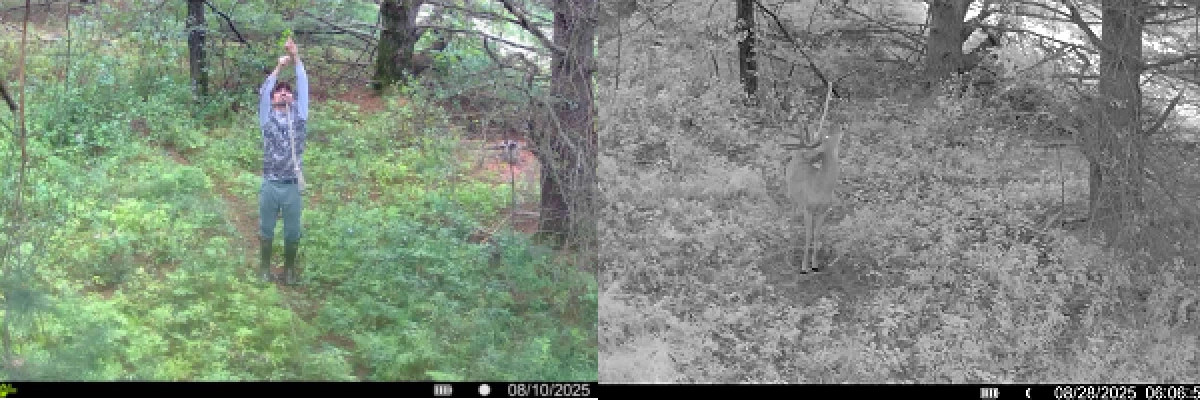
The first day or two, deer notice it. Some skirt it. Some walk right up and give it a curious sniff. By the end of the first week, does and fawns are working it casually — sniffing the branch, licking, leaving scent.
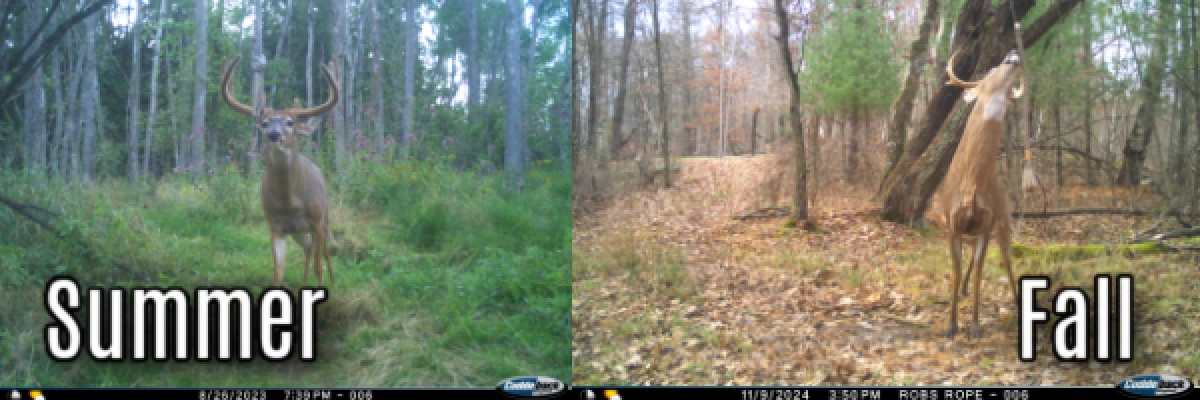
By week two, bucks in velvet start using it — often more than you'd expect for the summer months. Contrary to the old idea that scent communication only kicks on during the rut, deer talk to each other with scent all year long. Your stick catches every part of that conversation.
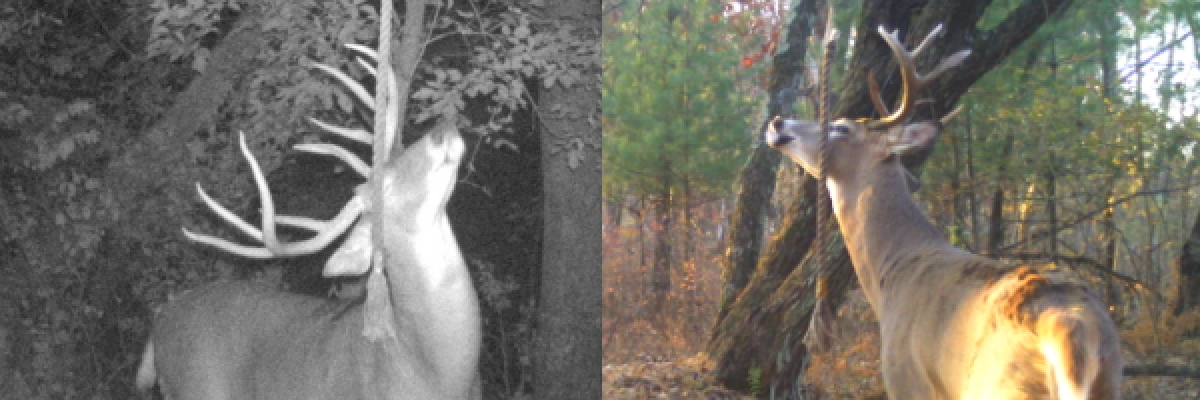
By early September, when the bucks start losing velvet and testosterone rises, the Licking Stick becomes a full-tilt communication hub. Every mature buck in the area works it on his own rounds, checks who else has been there, and leaves his own signature behind.
By October and November, when you're actually sitting the stand, that buck already knows the stick. He's been running it for months. He'll come to it out of habit — and he'll do it on your terms, on your spot, in your shot window.
That's inventory, pattern, and hunt in one setup.
Make Your Food Plots Better
The Licking Stick doesn't replace the food plot. It doesn't replace the water. It doesn't replace the stand.
It makes every one of them better.
The food gets them to the property. The water gives them a reason to stay. The stand puts you in position. The Licking Stick is the piece that puts them on the spot — the specific ground where you want them stopped, where your trail cam is dialed in, where your bow is already ranged.
Food is the draw. The Licking Stick is the finisher.
Shop The HODAG Licking Stick System
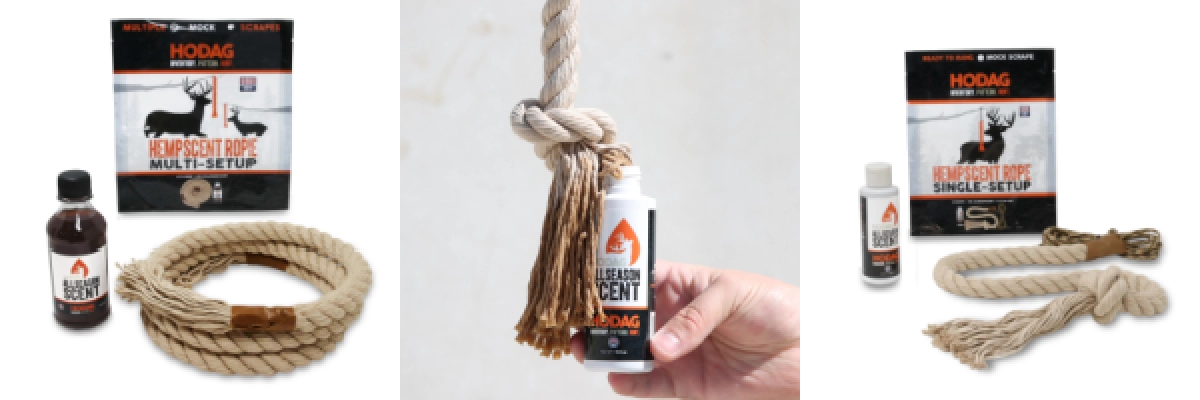
Licking Stick System — $44.99 · Made in the USAView The Licking Stick System →
Inventory. Pattern. Hunt.
HODAG Outdoors builds tactical scent and mock scrape systems for serious whitetail deer hunters. Every product is designed, engineered, sourced, and manufactured in the United States.
Learn More

